
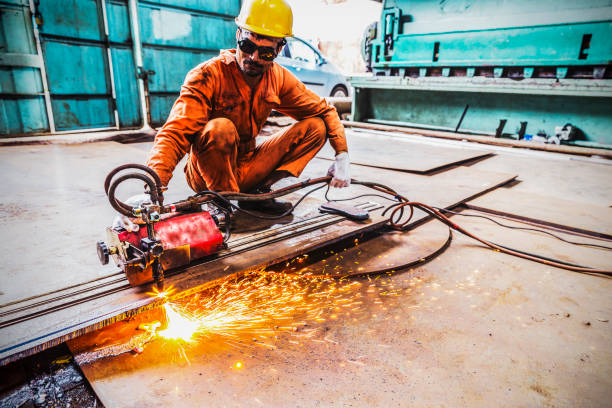

Metal work is about more than just cutting pieces apart—it’s about preparing those pieces so they come together stronger, smoother, and with less finishing labor. Plasma cutter solutions have become a major tool in this process, especially for teams working in Alabama where precision, speed, and efficiency drive projects in fabrication and assembly. A CNC plasma cutter doesn’t just slice through metal—it shapes how weld seams are formed and how they hold up once the job is done.
Consistent Shaping of Edges for Stronger Welding Joints
One of the biggest challenges in welding is making sure the edges of two pieces of metal align perfectly. A plasma cutter allows those edges to be shaped with consistent accuracy, ensuring that joints fit together in a way that produces stronger welds. By providing smooth, repeatable cuts, the plasma process reduces the risk of uneven gaps that can compromise structural integrity. For an Alabama robotics engineering company that designs automated systems, consistent edges are a foundation for creating reliable builds.
The use of CNC plasma cutter technology also brings more control to edge preparation. Operators can program exact dimensions, ensuring every piece cut meets tight tolerances. This level of accuracy is especially useful for Alabama CNC machining projects, where finished components must line up seamlessly in larger assemblies. Stronger joints mean fewer defects down the line, saving both time and resources.
Reduced Grinding Work After Plasma Cutter Finishing
Traditional cutting often leaves rough or jagged surfaces that demand significant grinding before welding. Plasma cutters minimize this problem by producing clean edges with little slag or burr. That reduction in secondary work can translate to faster project timelines and less wear on grinding equipment. For a robotics engineering company in Alabama, that efficiency makes a direct impact on productivity. Because plasma technology reduces grinding, welders spend more time joining and less time preparing. This improves shop workflow and lowers overall costs, particularly in Alabama CNC machining environments where labor efficiency and precision are equally important. The smoother surfaces not only look better but also require fewer corrections during final inspection.
How Plasma Solutions Improve Seam Uniformity Across Metal Projects
Uniform seams are vital for both appearance and strength. Plasma cutters help achieve that uniformity by cutting metal consistently, which ensures weld beads can be applied evenly along the seam. The result is a more professional finish with less risk of weak spots. This consistency is especially valuable for large-scale Alabama robotics engineering company projects where hundreds of welds must look and perform the same.
Plasma solutions also make it easier to repeat processes across multiple parts. For example, if a batch of frames needs identical seams, a CNC plasma cutter ensures each edge is identical. That means welders can apply the same technique with confidence, knowing the outcome will be uniform from start to finish.
Improved Heat Control During Cutting for Better Seam Shaping
Heat is one of the biggest variables in metal cutting. Excess heat can warp materials and create uneven seams. Plasma cutters provide greater heat control compared to older methods, keeping edges cooler and reducing the risk of distortion. This matters most in thin metal projects where even small warps can ruin alignment.
Better heat control also improves how weld seams form. Consistent temperature across the edge leads to smoother weld beads and less filler material needed during welding. For Alabama CNC machining shops, maintaining control over heat makes the difference between a seam that requires rework and one that passes inspection on the first attempt.
Faster Preparation of Metal Edges Before Final Weld Finishing
Preparing metal edges can be one of the most time-consuming steps in fabrication. Plasma cutters speed up that process by producing ready-to-weld edges in a fraction of the time compared to mechanical cutting or torch methods. Faster prep means projects move through production more quickly, a key advantage in Alabama CNC machining operations where deadlines are tight.
This efficiency doesn’t come at the expense of quality. Plasma-cut edges are not only faster to produce but also more precise, reducing the time spent on adjustments during fit-up. A robotics engineering company in Alabama benefits from this because it allows engineers to focus on higher-level tasks while still meeting project demands with accuracy.
Enhanced Surface Quality That Reduces Post Weld Corrections
Plasma cutting improves the surface finish of metal before welding. Smooth surfaces reduce the risk of defects such as porosity or weak fusion during the welding process. That translates to fewer corrections afterward, saving significant time in post-weld inspection and repair. For companies handling Alabama CNC machining, that consistency improves throughput and reduces material loss. Surface quality also plays into the aesthetics of the final product. Welds laid on clean, plasma-cut edges appear neater and require less polishing. This can be a major factor for industries where both strength and appearance matter, such as construction equipment or custom fabrication handled by an Alabama robotics engineering company.
Plasma Accuracy That Minimizes Material Waste in Weld Prep
Accuracy in cutting directly affects how much material gets wasted. Plasma cutters are known for their tight kerf width, which means less material is removed during the cut. This precise approach maximizes the usable surface of each metal sheet or plate. For Alabama CNC machining projects, minimizing waste reduces costs and helps maintain consistent project budgets.
The efficiency of a CNC plasma cutter extends beyond material conservation. Accurate cutting means fewer mistakes that require rework, leading to less scrap overall. That benefit alone makes plasma solutions a valuable tool for any robotics engineering company in Alabama looking to stay competitive while improving both weld prep and seam finishing.